Walk back in time to when birds ruled New Zealand
Many people think of New Zealand as two islands, when it is actually three. Subantarctic
Stewart Island, which lies 30 kilometres south of the South Island, has a land
area of nearly 2000 square kilometres, and 85% of it is included within the boundaries
of Rakiura National Park.
The most recent addition to New Zealand's national park portfolio, Rakiura is
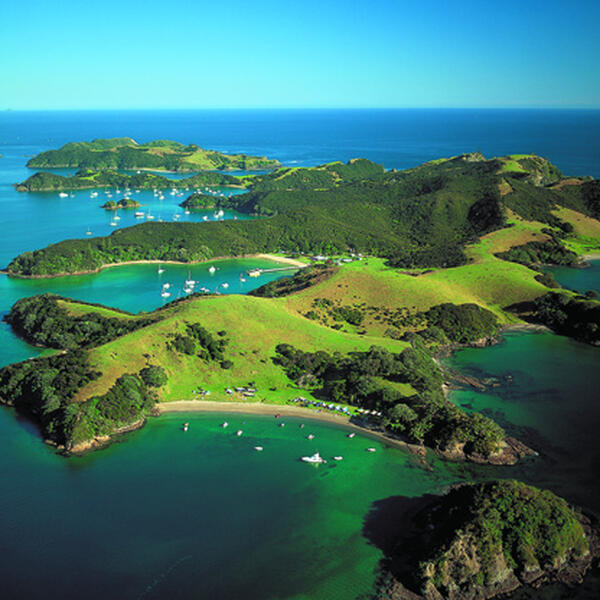
an enchanted world of unmodified ecosystems and habitats. From dense coastal rainforests
and freshwater wetlands to vast sand dunes and granite mountain ranges, the park
provides an exceptional opportunity to see native wildlife and primeval landscapes.
Key Highlights

| The skies seem bigger in Rakiura National Park. |
|
|
|
 |
Rakiura translates to 'the Land of Glowing Skies', a name that refers to both
the beautiful night-sky phenomenon called the Aurora Australis (the Southern Lights)
and the breathtaking sunsets that burn on the western horizon.
Night time is very special in this park for other reasons too. While you're tucked
up inside a Department of Conservation hut, nocturnal bird life provides an unforgettable
chorus. You'll hear the calls of ruru (the native owl), weka and kiwi. On Stewart
Island, you have an excellent chance of seeing kiwi in the wild.
During daylight, the serenade continues. Along with tui, bellbirds, tomtits,
grey warblers and fantails, you'll hear red-crowned parakeets, bush parrots and
Stewart Island robins. The coastal fringes of the island are home to three species
of penguin, fernbirds, banded rails, weka and many kinds of seabird.
Accommodation
In the park
The Department of Conservation provides more than 25 hikers' huts within the
park, including a few 'Great Walk' huts that offer a higher-than-usual standard
of accommodation. In the island's only town, Oban, there is motel, hotel, B &
B and lodge accommodation.
Around the park
Rakiura National Park is a one-hour ferry ride away from the South Island town
of Bluff, where a full range of accommodation can be found. The nearest city is
Invercargill, a 20 minute drive from Bluff.
Key Activities
Short and long walks
| |

| There's nothing on earth quite like a kiwi, New Zealand's most famous national symbol |
|
 |
|
With only 25km of roads, Stewart Island is a paradise for hikers. There are 245
kilometres of walking tracks, and they can all be accessed from the town of Oban.
The 'Great Walk' on the island is the Rakiura Track, a circuit that takes three
days to complete. For day-trippers, there's a range of short walks to enjoy -
Fern Gully (2 hours return), (Ryan's Creek 3 hours return), Horseshoe Point (3
hours return) and Moturau Moana (1 hour return), to name just a few.
Island sanctuary and kiwi spotting
A water taxi can take you to Ulva Island, an open sanctuary managed by the Department
of Conservation. Its restored forest and lack of predators make it a safe environment
for many rare bird and plant species. Two of three times a week, guided trips
to Masons Bay provide the chance to watch kiwis eating sandhoppers at the beach.
|
|
|
www.newzealand.com Pages
|
|
|
Other Sites
|
|
|
|
RAKIURA NATIONAL PARK
 |
|
 | Featured Walk |  |
|
 |
 |
| RAKIURA TRACK, RAKIURA NATIONAL PARK |
Stewart Island is a world where nature is very much in charge. Discover peace, birdsong and scenery that has barely changed in thousands of years.
Photo credit: Gareth Eyres
|
|
 |
 |
Read more
|
Seasonal Tips
DURING YOUR VISIT
Some hikers make a point of visiting the park in winter - the weather can be very settled, and there are just enough people in the huts for good company. The best time of the year to watch for the Aurora Australis.
Key Tips
- While it rains three days out of four, rainfall is frequently a brief, light shower - however you should always have rainwear handy.
- The island has many delightful beaches. In summer the water is warm enough for swimming.
- Stewart Island has only 25 kilometres of road, so hiking boots are more than essential.
- The weather can suddenly turn wild, wet and windy any time of year - be prepared for anything.
- The kiwis that live in this park feed during daylight, which can last until nearly midnight in summer.
|