PreviousNext
Abel Tasman Coastal Track Exploring the Abel Tasman by sea Halfmoon Bay, Stewart Island Mount Aspiring
By Ian Trafford By Ian Trafford By Gareth Eyres By Small World Productions

Remember to sign in or sign up to save your trip.
newzealand.com
There are 14 National Parks throughout New Zealand. Find out about each of them below.
Te Urewera National Park, between the Bay of Plenty and Hawkes Bay, is famous for its remote, rugged forest and lakes. Includes the Lake Waikaremoana Great Walk and contains a full complement of North Island native forest birds (except weka).
> Find out more
Tongariro, the first national park in New Zealand and closest to Auckland is a dual World Heritage area recognising its important Maori cultural and spiritual associations as well as its outstanding volcanic features. A place of extremes and surprises, from herb fields to forests, from tranquil lakes to desert-like plateau and active volcanoes. Features the Tongariro Northern Circuit Great Walk.
> Find out more
Whanganui National Park, protects the Whanganui river running from the mountains in the central North Island to the Tasman Sea. Tramping tracks through wild lowland forests and river trips down the mighty Whanganui are popular activities. The area has a unique history and Maori culture is an important part of the park experience. The Whanganui Journey is part of the Great Walks network.
> Find out more
Egmont National Park on the North Island’s West Coast is dominated by the 2518m high volcanic peak of Mt Taranaki (also known as Mt Egmont). A challenging climb offers spectacular views or there are more relaxing walks through verdant forest to waterfalls, wetlands and excellent viewpoints.
> Find out more
Abel Tasman, Kahurangi and Nelson Lakes National Park are all within a few hour’s drive from Nelson at the top of the South Island.
Abel Tasman National Park is known as the finest coastal walk in the country with golden beaches and sculptured granite cliffs surrounded by diverse native forest. It also has a mild climate and is a good place to visit at any time of the year. There is an inland track and the Abel Tasman Coast Track Great Walk.
> Find out more
Kahurangi National Park covers the West Coast at the top of the South Island. It protects wonderfully diverse natural features including untracked wilderness and a wonderful network of tracks exploring wild rivers, high plateaux, alpine herbfields and coastal forests. Includes the Heaphy Track, the longest of the country’s Great Walks.
> Find out more
Nelson Lakes National Park protects the northern-most Southern Alps. The park offers tranquil beech forest, craggy mountains, clear streams and lakes both big and small.
> Find out more
Westland, Mount Aspiring and Fiordland National Parks form the South-West New Zealand World Heritage Area preserving unique geology, rare flora and fauna and a wonderful history.
Westland Tai Poutini National Park extends from the highest peaks of the Southern Alps to the rugged and remote beaches of the wild West Coast. It is an area of magnificent primeval vistas - snow-capped mountains, glaciers, forests, tussock grasslands, lakes, rivers, wetlands and beaches.
> Find out more
Mount Aspiring National Park, straddling the southern end of the Southern Alps around Queenstown/Wanaka region is a walker's paradise and a must for mountaineers. The views are endless and unforgettable. The three largest of 100 glaciers in the region flank Mt. Aspiring itself.
> Find out more
Fiordland National Park covers the remote south-west corner of New Zealand and is one of the great wilderness areas of the Southern Hemisphere. It is an area where snow-capped mountains, rivers of ice, deep lakes, unbroken forests and tussock grasslands produce a landscape of exceptional beauty. Some of the best examples of animals and plants, which were once found on the ancient super-continent of Gondwana, still exist here. The Kepler, Milford and Routeburn tracks are Great Walks highlighting different aspects of this spectacular park. The Hollyford Track lies at the northern boundary with Mount Aspiring National Park.
> Find out more
Paparoa National Park on the West Coast is perhaps most famous for the Pancake Rocks and blowholes of Dolomite Point, near the settlement of Punakaiki. Luxuriant coastal forest, limestone cliffs and canyons, caves and underground streams, and an absolutely spectacular coastline, are all packed into one national park.
> Find out more
Arthur's Pass National Park straddles the main divide in the heart of the Southern Alps between Canterbury and the West Coast. A park of contrasts, with dry beech/tawhai forest in the east, luxuriant rainforest on western slopes, and a historic highway and railway running through the middle.
> Find out more
Aoraki/Mount Cook in the centre of the South Island is New Zealand's great alpine park. It has the highest mountains and the largest glaciers. Aoraki/Mount Cook Village and all visitors to the park are dwarfed by the immensity of the landscape that surrounds them.
> Find out more
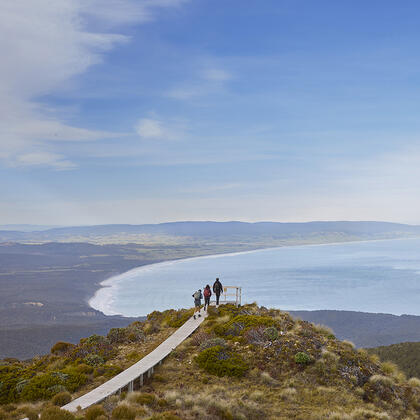
Rakiura National Park makes up about 85 percent of Stewart Island/Rakiura. Situated only 30 kilometres south west of Bluff, between latitudes 46 and 47 degrees south, it could well be in another part of the world. Visitors can explore pristine beaches, sheltered inlets, and coastal forest, and see seals, penguins, kiwi, weka and many other birds. There are also opportunities for hunting, fishing, boating, cruises and scenic flights. The Rakiura Track is a one of the Great Walks.
> Find out more
For more information on each of the National Parks see Department of Conservation
By Lucy Hodgson