

Whatever the season, it’s always a good time to visit New Zealand as there’s so much to see and do year-round.
Whether you’re looking for outdoor adventure, family fun, rest and relaxation, food and wine, cultural experiences or a bit of everything, New Zealand has something to suit, no matter when you visit.
New Zealand’s busy ‘high season' is summer, while the quieter ‘shoulder seasons’ are spring and autumn. Winter in New Zealand can be busy or quiet depending on where you go – ski areas like Queenstown and Wānaka in the South Island and the Central Plateau in the North Island are always buzzing in the depths of winter, whereas coastal areas and big cities like Auckland and Wellington are less crowded. Travelling in the shoulder seasons can be a good idea as you’ll often find more availability and better rates on accommodation and activities.


This is the most popular time to visit New Zealand for sunny beach days, adventures on the water, beautiful bush walks and mountain hiking. Visitor numbers are high and summer holidays mean more Kiwis are travelling around New Zealand too, making the most of the sunshine and Christmas break.


If you would like sunshine but fewer crowds, then autumn is a fantastic time to visit New Zealand. The days are still quite warm early in the season (that means beach swims through March and well into April in some parts of the country) with cooler evenings, and there is beautiful scenery as the autumn colours spread through the countryside. Bush walks and hiking are great options now as the days are not as hot.
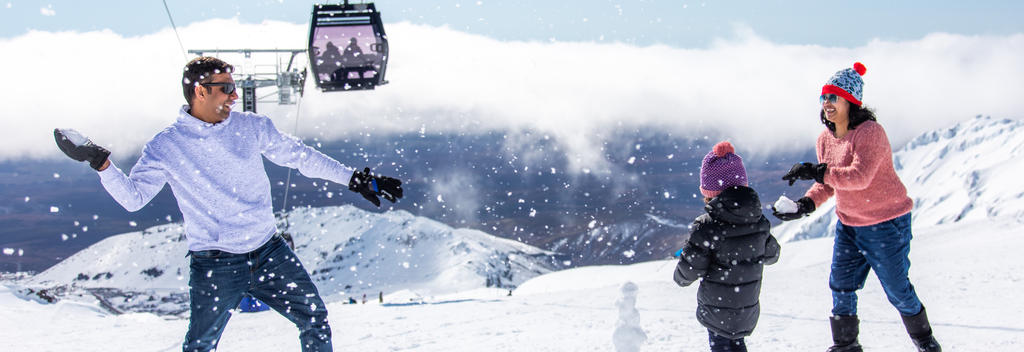

Winter in New Zealand is the best time to visit if you’re into snow sports. Queenstown and Wānaka in the South Island and the Central Plateau in the North Island are the most popular spots for skiing and snowboarding. While many ski fields open in June, the highest snowfall is usually throughout July and August. If you’re planning on driving in areas of New Zealand that are prone to snow, you’ll need to carry chains and take extra care on the roads.


Spring in New Zealand is when the weather starts to warm up, although there is a high chance of rainfall around this time of year. It’s the perfect time to enjoy outdoor activities such as hiking, and there is often spring skiing available at some ski fields too. You’ll find New Zealand’s countryside full of bouncing lambs and spring blossoms, so it makes for great photos! Warm days and cool nights are common.
Temperatures in New Zealand are generally mild, but the weather can vary a lot around the country and might change quickly as we are a relatively narrow island nation. Locals like to joke that you can experience four seasons in one day! It pays to be prepared for what you might encounter on your travels.
New Zealand’s climate is diverse – the north of the North Island can have warm subtropical weather in summer, while inland alpine areas of the South Island can have heavy snow and temperatures as low as -10°C (14°F) in winter.
The hottest months in New Zealand are January and February, and the coldest month of the year is July. The average temperature in New Zealand decreases as you travel south.
New Zealand is lush and green for a reason! Our average rainfall is high and spread evenly throughout the year. Whatever time of year you are visiting, pack a raincoat as you never know when you might get showers.
Snow typically falls during the months of June through to October, though cold snaps can occur outside of this. Most snow in New Zealand falls in the mountainous areas, like the Central Plateau in the North Island, and the Southern Alps in the South Island. It also falls heavily in inland Canterbury and Otago in the South Island. It very rarely snows in the coastal areas of the North Island, although they experience some heavy overnight frosts in winter.
The sunniest places in New Zealand (recorded hours of sunshine) are the Bay of Plenty, Hawke's Bay and Nelson/Marlborough. As New Zealand observes Daylight Saving, daylight can last up until 9.30pm during summer months.
The sun in New Zealand is much stronger than elsewhere and in warmer months you can get burnt quickly without sunscreen or other sun protection. This is because we have relatively little air pollution compared with many other countries, and less ozone, which makes the UV rays in our sunlight very strong.
Take particular care from September to April, especially between 10am and 4pm, even on cloudy days. Be 'SunSmart' by using these three simple steps when you go outdoors:
You can check New Zealand weather conditions on the MetService website.(opens in new window)


