
A pōwhiri is a Māori welcoming ceremony, involving whaikōrero (formal speech) , waiata (singing) and kai (food).
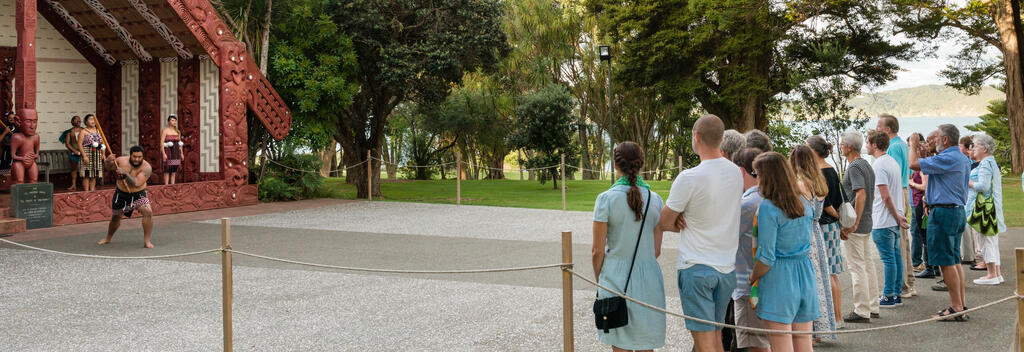

Traditionally, a pōwhiri begins at the waharoa (entrance to the marae), starting with an initial karanga usually conducted by the kaikaranga (women caller) who stands at the front. The manuhiri (visitors) are called on by a kaikaranga who begins the karanga, to which the manuhiri kaikaranga responds to. The manuhiri move up slowly behind the kaikaranga, until they reach the mahau (porch). The karanga will continue until the manuhiri reach the mahau of the marae.
This removes the tapu (sacredness) from the manuhiri, who are referred to as waewae tapu (sacred feet) if they are first-time visitors to that particular marae.
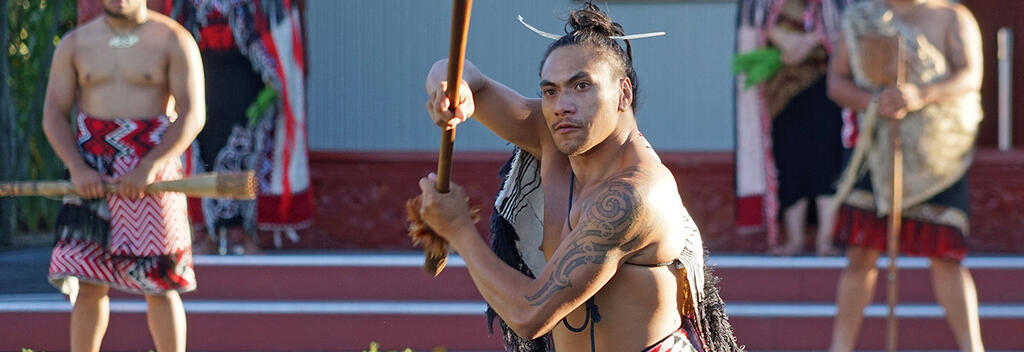
A challenge that attempts to determine the intent of the manuhiri (visitors), which, once established, clears the way for the rest of the welcome ceremony. They may carry a taiaha (spear-like weapon) and will lay down a token, often a small branch, for the visitors to pick up to show they come in peace.
Manuhiri move into the wharenui (meeting house) or on the seats arranged in front of the wharenui.
The men sit in the front and the women at the back, with the kaikorero sitting on the paepae (bench for male speakers/leaders) at the front of the group of seats. Everyone remains standing until the tangata whenua motion everyone to sit.
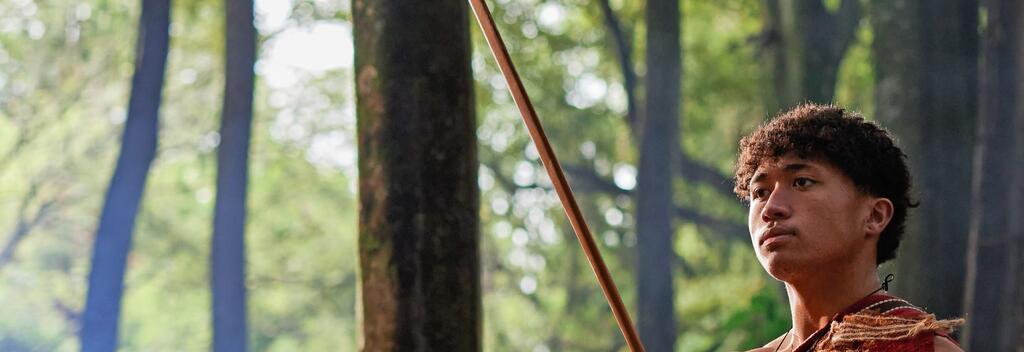
The haukāinga (local people of a marae) will initiate the whaikōrero, followed by a waiata (song) that the tangata whenua sings in support of their speaker(s). The manuhiri (guests) then follow the same kawa (protocol).
After manuhiri have sung their waiata, a koha (gift/offering) is presented, being placed in front of the haukāinga. Symbolising thanks to the hosts for the manaakitanga (hospitality) extended to them. The process then moves back to the haukāinga who close the whaikōrero proceedings.
Nearing the ending of the pōwhiri, the manuhiri move across to hongi the haukāinga. This involves the shaking of hands and a gentle pressing of noses, possibly also a kiss on the cheek, signifying the sacred breath of life – the mauri (life principle). Each marae has a different kawa on who is at the front of the line.
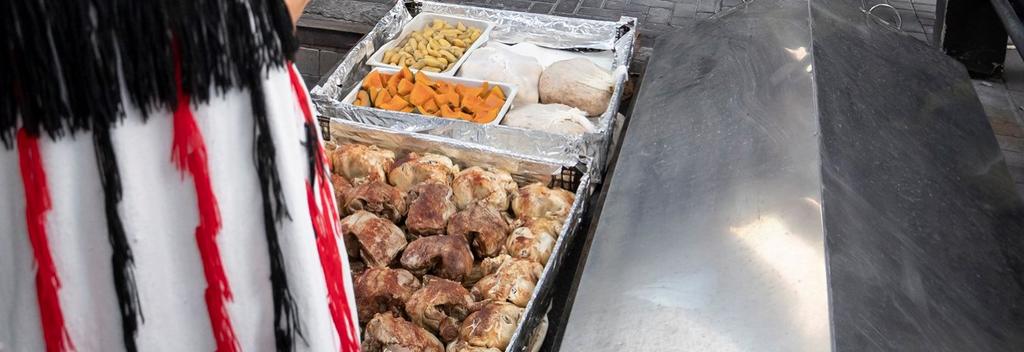
After the pōwhiri, kai (food) will be shared, keeping with the Māori tradition of manaakitanga (hospitality). Everyone gathers in the wharekai (dining hall), where the formal process of the pōwhiri ends.
As a sign of respect, manuhiri are fed first; kaumātua (elders) and tamariki (children) next, followed by the pakeke (adults).
Traditionally, a hāngī (earth oven to cook food with steam and heat from heated stones) was prepared.
There are plenty of places where you can take part in a pōwhiri, here are just a few.