Discover Aotearoa New Zealand’s geothermal heartland and its bounty of other attractions.
Find experiences and dealsGetting there
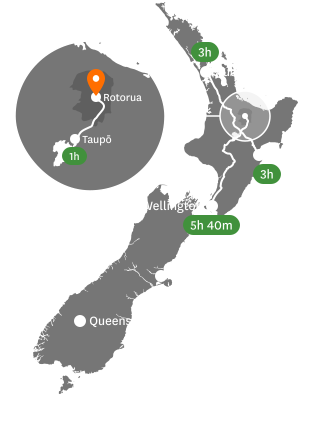
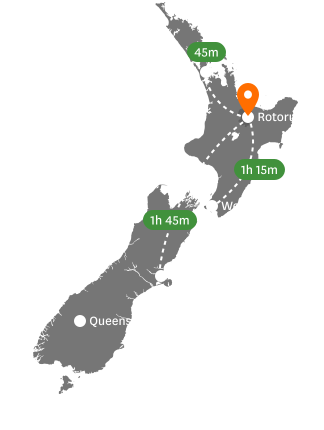
There’s nowhere quite like it. Rotorua is famous for its geothermal sights—furious geysers, boiling mud, and sublime hot pools—but it is also a thriving centre for Māori cultural experiences and an adventure playground for all things adrenaline and the great outdoors.
Rotorua, in the central North Island, is renowned for its geothermal activity, including geysers, boiling mud pools and natural hot springs, and is a heartland of Māori culture.
It depends on what you want to see. Wai-O-Tapu is known for colourful mineral pools such as the Champagne Pool. Te Puia has the Pōhutu Geyser alongside Māori cultural arts. Waimangu Volcanic Valley has walking trails through a valley shaped by the 1886 Mount Tarawera eruption.
Rotorua offers several Māori cultural experiences, including evening storytelling and feasts at Te Pā Tū, daytime experiences at Te Puia and a look at how a local community lives alongside geothermal activity at Whakarewarewa Living Māori Village.
Rotorua has plenty of adventure activities. Highlights include mountain biking in Whakarewarewa Redwood Forest, white-water rafting on the Kaituna River (including a drop over Tutea Falls), the Skyline Luge and ziplining through forest canopy.
Rotorua is a year-round destination. Summer (December to February) is ideal for lake activities, hiking and biking, while autumn and winter (March to August) are popular for soaking in hot mineral pools in crisp, cool weather.