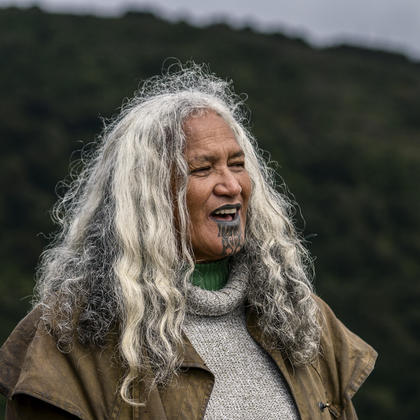
Kapa haka - traditional Māori performing arts - forms an emotive, visually rich and powerful part of the Aotearoa cultural experience.
Kapa haka is the term for Māori performing arts. A kapa is a group of people and haka means to perform or dance. But unlike dance as we know today, kapa haka involves an immersive combination of waiata (song), choreographed movement, chanting and actions.
During a kapa haka performance, you'll experience a range of performance styles from ancient chants and choral singing to graceful action songs and ferocious war dances.
Kapa haka is an artform that is not just seen or heard but very much felt. This feeling, the wairua, comes from the group as they tell stories of the ancestors, of love and war and their connection to the land. The items are performed with a passion, deep connection to meaning and as an expression of collective identity that links through generations.
If you’re lucky to visit in February 2027, you might catch the best kapa haka teams at Te Matatini(opens in new window), the largest kapa haka festival in the world.

In waiata-ā-ringa (action songs), the lyrics are complemented by symbolic hand movements. The performers quiver their hands quickly, a movement called wiri, which can symbolise shimmering waters, heat waves or even the breeze moving the leaves of a tree.
Waiata-ā-ringa are usually accompanied by an acoustic guitarist and can be slow, fast, furious, or fun and flirtatious, depending on the meaning of the song.


Poi is a form of dance in which each performer skillfully twirls one or more poi (ball on a string), swiftly and in perfect unison with the others. Sudden direction changes are achieved by striking the ball on a hand or other part of the body, and the satisfying soft thudding noise creates a percussive rhythm.
It is usually women who perform the poi, and a skilled performance will convey their talents and a warm sense of grace, beauty and charm.


Haka is a generic word for dance. But “ha” means breath and “ka” means to ignite. So, haka can mean to ignite the breath or ignite the spirit.
Made famous by the All Blacks, the national rugby team, who perform haka prior to each test match, haka comes from a cultural tradition that celebrates the authentic rawness of the human spirit.
Performed in groups, the intention is to express a shared collective purpose, whether that be to challenge, welcome, celebrate or mourn.


Pūkana (facial expressions) are an important emotive element of kapa haka. A pūkana helps to emphasise a point in a song or haka and demonstrate the performer’s ferocity, intensity or passion.
For women, pūkana involves opening their eyes wide and jutting out their chin. For men, it means widening their eyes and stretching out their tongue or baring their teeth. Though these expressions may be intimidating, they are not necessarily a sign of aggression.
Here are just a few locations where you can experience Māori performing arts.