
Whether you know your punchbowl from your multi-step, or you just go with the flow, there’s a waterfall in Aotearoa New Zealand waiting to inspire you.
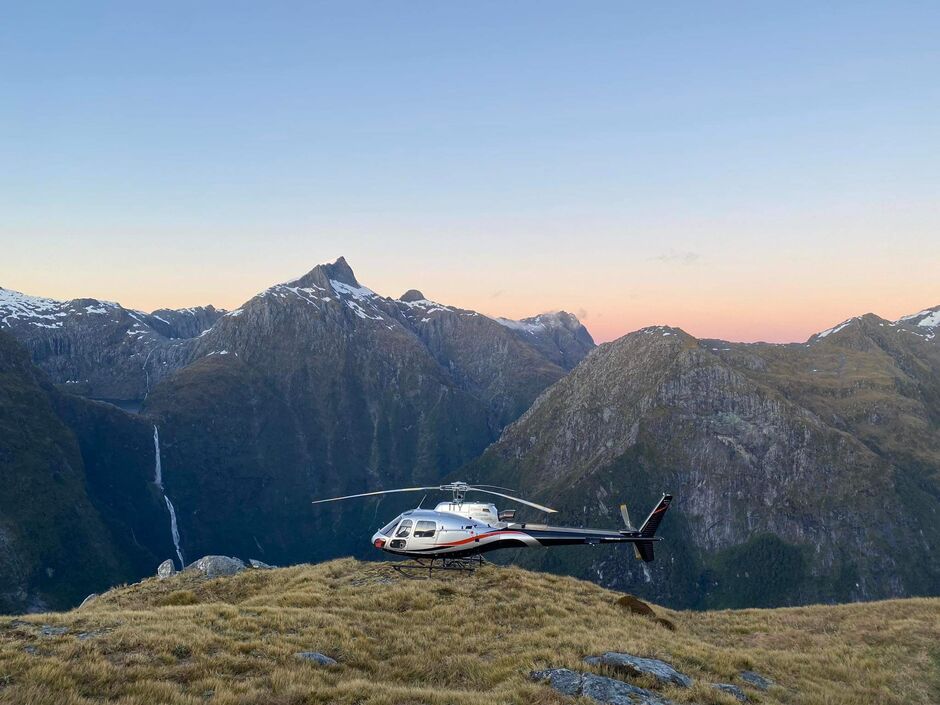
Although technically a cascade – since its water never falls freely from the rock – Sutherland Falls(opens in new window) ranks among the tallest and most breathtaking waterfalls in the world. Located in a remote corner of Fiordland, it’s inaccessible to hikers, but scenic helicopter flights offered by Milford Helicopters provide a rare opportunity to fly over the falls and land at Lake Quill.
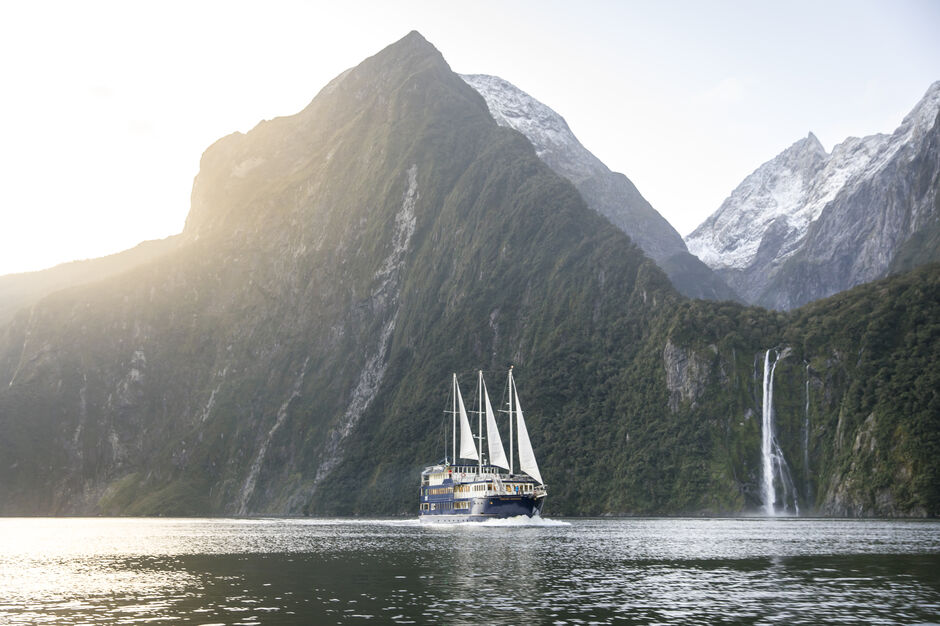
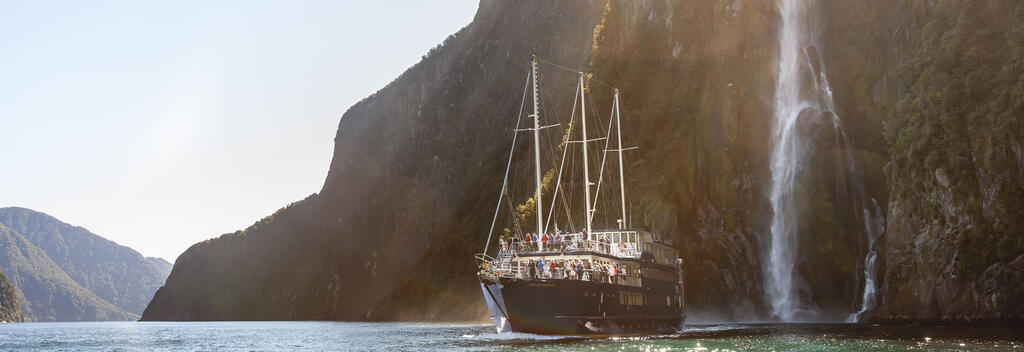
If you’re obsessed with waterfalls, Milford Sound is the Promised Land. Although famous for its countless falls, the sound has just two permanent waterfalls: Lady Bowen Falls and Stirling Falls. However, visit after rainfall and the cliffs come alive with temporary waterfalls, transforming the landscape into a mesmerizing spectacle.


Huka Falls is where New Zealand’s longest river, the Waikato, narrows from the width of a rugby field to just 15 metres as it passes through a rocky gorge. This forces a large volume of water through at high speed – enough to fill and an Olympic-sized swimming pool in just eleven seconds. You can view the falls from a nearby footbridge or take a jet boat ride for a closer look.
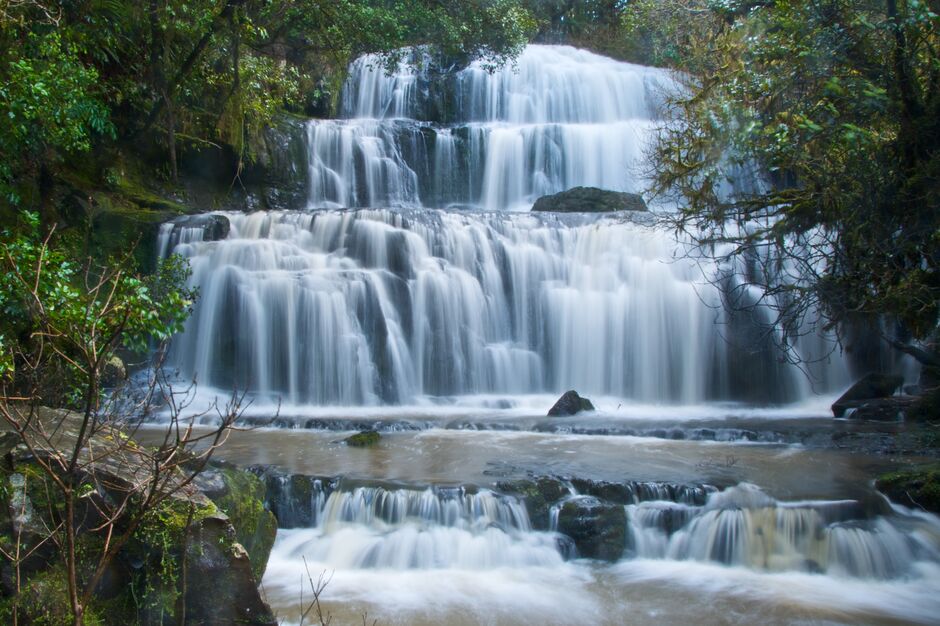

When it comes to scenery, you’re spoilt for choice in the Catlins, but Pūrākaunui Falls(opens in new window) is a true standout. Cascading 20 metres over three tiers and framed by native beech forest, the falls are one of Otago's most iconic sights. A short, scenic walk from the car park leads to a well-positioned viewing platform, offering the best vantage point to take in the falls.


Tawhai Falls(opens in new window) is a striking 13-metre cascade over ancient lava formations in the heart of Tongariro National Park, a UNESCO Dual World Heritage site, celebrated for its natural beauty and cultural significance. Best known as the filming location for Gollum’s pool in “The Lord of the Rings” trilogy, the falls are easily reached via a short, scenic walk through beech forest, offering excellent views of the park’s iconic volcanoes.


One of the joys of block waterfalls is that they are shallow, allowing you to walk right up to them – and Rere Falls(opens in new window) is no exception. Stretching for 20 metres, it is the perfect for spot for a paddle. Just a few minutes beyond the falls is Rere Rockslide(opens in new window), a smooth 60-metre cascade beloved by locals who grab whatever they can find – from boogie boards to tire tubes – to ride down it. Heads up: boogie boards go fast; tyre tubes go slower. The landing pool is 4 metres deep, so strong swimming skills are a must.
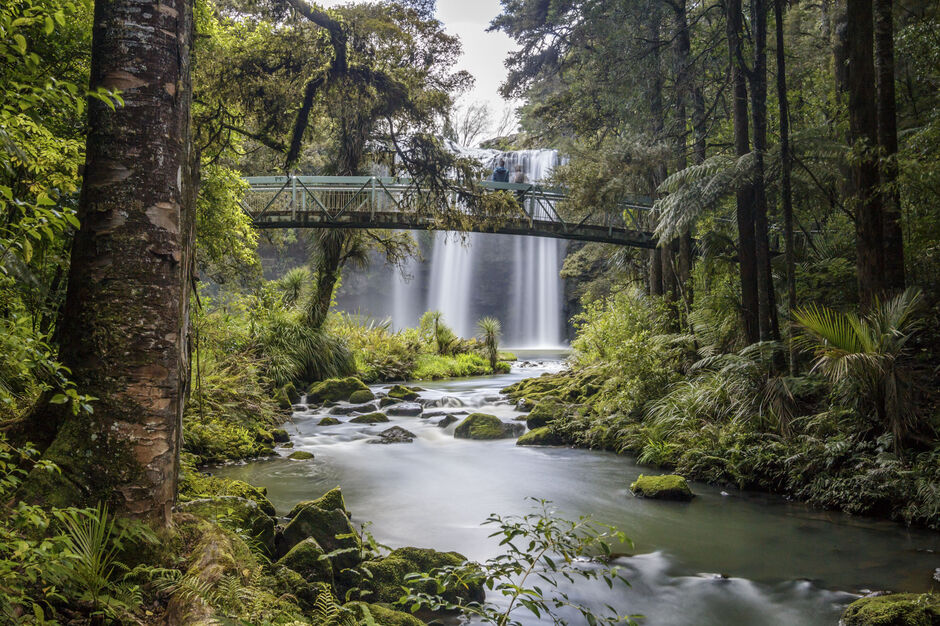

Just a 10-minute drive from Whangārei's city centre, Otuihau Whangārei Falls(opens in new window) is a stunning curtain waterfall that plunges 26 metres over a basalt cliff into the pool below. You can take the steps down to the base for an up-close look or enjoy panoramic views from the top viewing platform. To see the falls at their best, visit after rainfall – during dry spells, the falls can slow to a trickle.
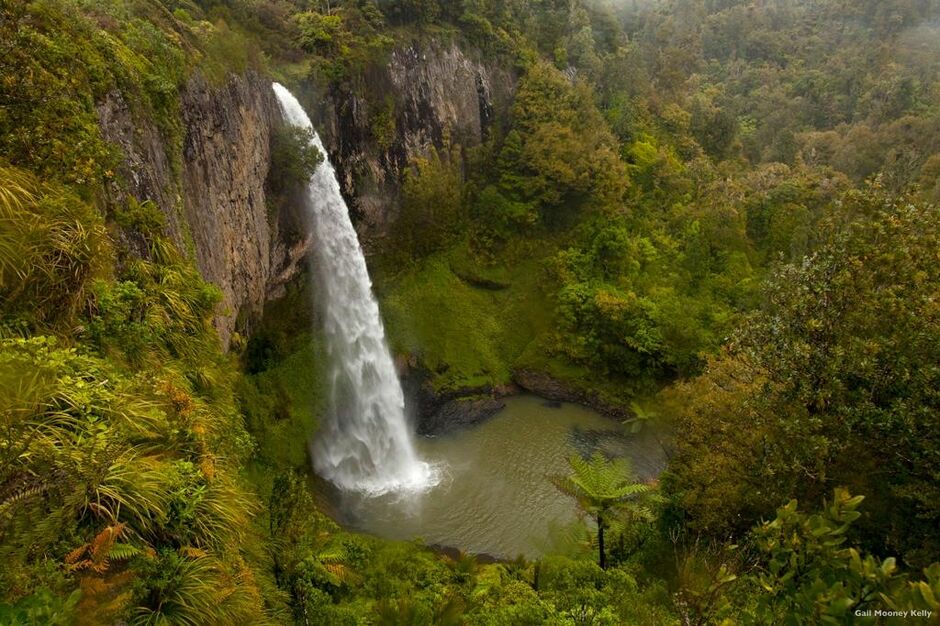

Just 15 minutes from Raglan, Wairēinga / Bridal Veil Falls(opens in new window) is one of the most scenic waterfalls in the region. A short, easy walk from the car park leads to several viewpoints along the trail, offering stunning views of the 55-metre drop.
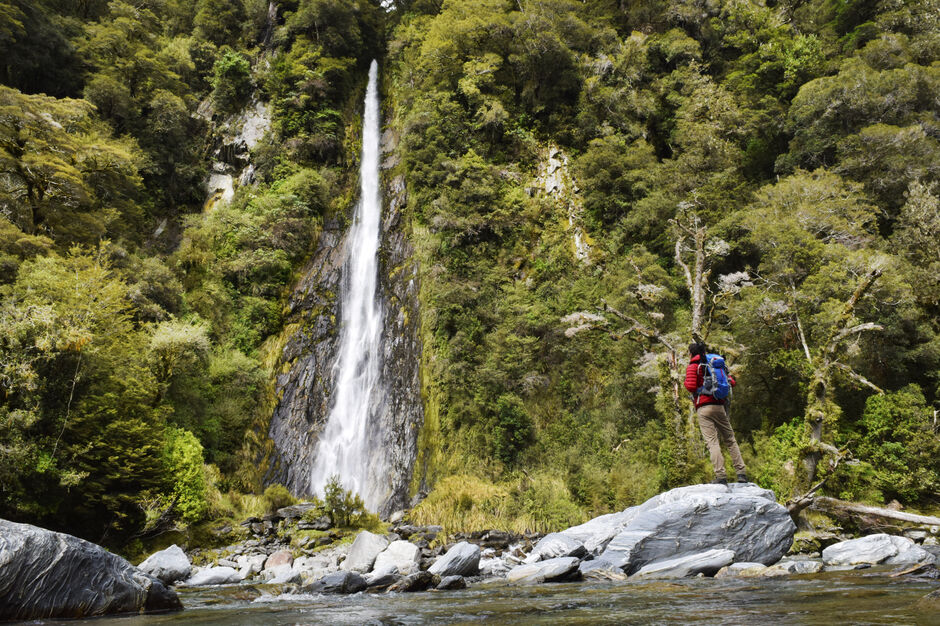

Located in Mount Aspiring National Park, Thunder Creek Falls is a must-see stop along the Haast Pass. This impressive 96-metre waterfall is easily accessible via a short, sealed walking track that passes through kāmahi and silver beech forest. The track leads to a viewing platform overlooking the Haast River, offering a peaceful spot to take in the scenery.
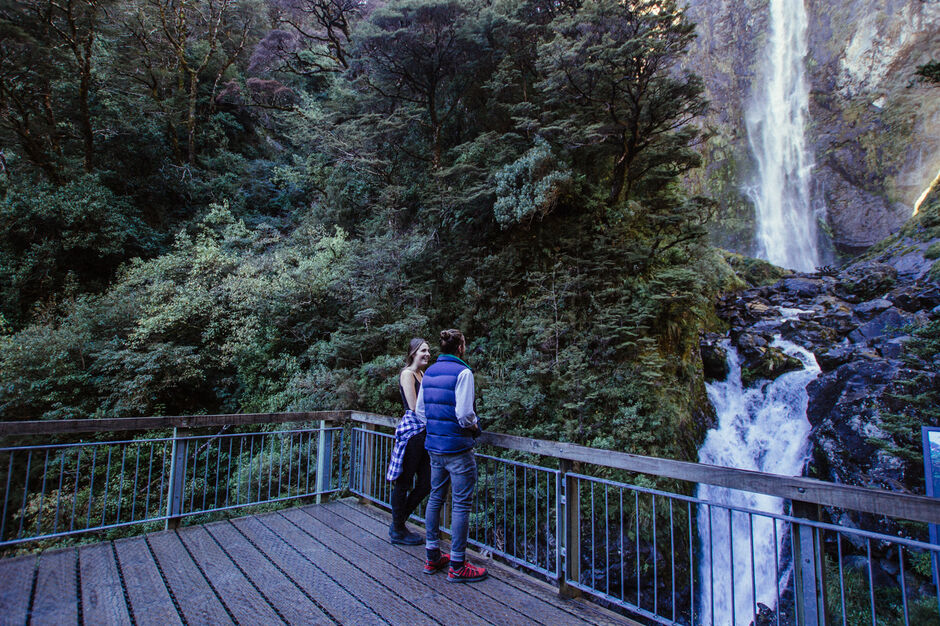

Devil’s Punchbowl Falls(opens in new window) may share its name with other waterfalls around the world, but few can rival the beauty of its setting in Arthur’s Pass National Park. This spectacular alpine region surrounds the historic pass over the Southern Alps, linking Canterbury to the West Coast and showcasing some of New Zealand’s most stunning alpine scenery. The falls are easily reached via a 2-km return walk through native beech forest. The well-maintained track leads to a viewing platform – from here you’ll get a perfect view of the falls as they plunge 131 metres, roughly the height of the London Eye, into a rocky basin.
Waterfalls and swimming holes are beautiful places to explore, but swimming in them can be dangerous. Fast flowing waters and areas just above or below powerful waterfalls are particularly hazardous. It is difficult to swim against the current and you can easily be swept away or sucked under a waterfall. Slippery rocks, steep cliffs, and the remote locations of many waterfalls add further hazards.